Large organizations often manage hundreds or even thousands of assets spread across multiple facilities, departments, and operational sites. These assets may include production equipment, HVAC systems, utility infrastructure, vehicles, IT hardware, and various support assets that keep daily operations running smoothly. As the asset portfolio grows, maintaining accurate records becomes increasingly challenging, especially when information is scattered across spreadsheets, paper records, or disconnected systems.
An incomplete or outdated asset register can lead to maintenance delays, compliance risks, budgeting inaccuracies, and poor decision-making. Teams may struggle to locate assets, track maintenance history, or determine asset ownership. This is why effective asset register management is a fundamental part of successful asset management strategies in large organizations. With the right practices, businesses can improve asset visibility, streamline maintenance operations, and make better long-term investment decisions.
This article covers the common challenges of asset register management and the best practices that help large organizations maintain accurate, organized, and reliable asset records. It also explains how CMMS software can simplify asset tracking and lifecycle management.
What is asset register management?
Asset register management is the process of creating, maintaining, and updating a centralized record of all physical assets owned and operated by an organization. The asset register serves as a structured database that contains detailed information about each asset throughout its lifecycle.
An asset register typically includes:
- Asset identification number
- Asset name and category
- Asset location
- Purchase and installation details
- Manufacturer information
- Warranty information
- Maintenance history
- Current asset condition and status
- Assigned department or owner
A well-maintained asset register provides a complete view of organizational assets and supports maintenance planning, compliance activities, financial reporting, asset tracking, and lifecycle management. It helps organizations know exactly what assets they own, where those assets are located, and how they are performing over time.
Common asset register challenges in large organizations
As organizations expand, managing asset records becomes increasingly complex. Several challenges can affect the accuracy and reliability of asset information.
Inconsistent asset data across departments
Different teams often use different methods for recording asset information. Maintenance, operations, finance, and procurement departments may maintain separate records, resulting in duplicate entries, missing information, and inconsistent asset naming practices.
Difficulty tracking asset movement
Assets are frequently relocated between facilities, departments, production areas, or project sites. Without proper tracking procedures, organizations may lose visibility into asset locations and usage patterns.
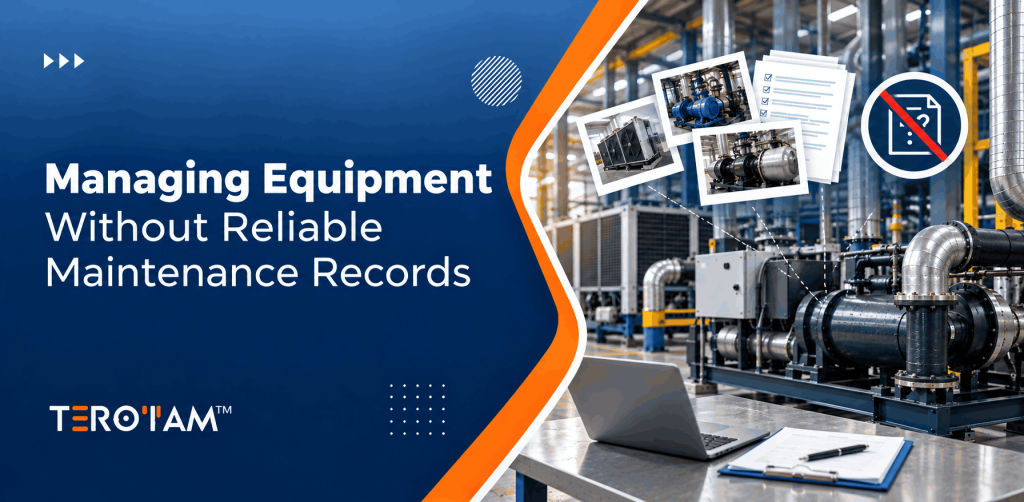
Missing or outdated records
Asset information changes throughout its lifecycle. Equipment upgrades, maintenance activities, relocations, and replacements must be documented promptly. Failure to update records can create significant gaps in asset visibility.
Limited lifecycle visibility
Many organizations focus only on acquisition records while overlooking maintenance history, operational performance, and end-of-life information. This limits the ability to make informed decisions regarding repairs, replacements, and capital planning.
Asset register management best practices for large organizations
Large organizations require structured processes and standardized procedures to maintain accurate and reliable asset records. The following best practices can significantly improve asset register management.
Standardize asset naming and classification
A standardized asset naming system creates consistency across the organization and reduces confusion when managing large asset inventories.
Organizations should establish clear rules for:
- Creating unique asset identification numbers
- Defining asset categories and subcategories
- Standardizing location codes
- Maintaining consistent naming conventions across all facilities
When assets follow a common classification structure, teams can quickly locate information, generate reports, and perform asset analysis without dealing with duplicate or inconsistent records.
Maintain a centralized asset register
One of the most common causes of asset management problems is the use of multiple disconnected databases and spreadsheets.
A centralized asset register helps organizations:
- Create a single source of asset information
- Improve visibility across departments
- Reduce duplicate records
- Simplify reporting and audits
- Improve collaboration between teams
When all stakeholders work from the same asset database, information becomes more reliable and easier to manage.
Capture complete asset information from the beginning
The quality of an asset register depends heavily on the quality of the information entered during asset acquisition and installation.
Organizations should collect and store important information such as:
- Purchase details
- Asset specifications
- Manufacturer documentation
- Warranty information
- Installation records
- Vendor details
- Maintenance requirements
Capturing complete information at the beginning reduces the need for future data collection efforts and supports more effective lifecycle management.
Conduct regular asset audits and verification
Even the most well-maintained asset register can become inaccurate over time if records are not verified regularly.
Periodic audits help organizations:
- Confirm asset existence
- Validate asset locations
- Identify missing assets
- Detect duplicate records
- Verify asset condition
- Improve overall data accuracy
Using barcode labels or QR codes can make verification activities faster and more reliable. Regular audits help ensure that the asset register reflects actual field conditions.
Track the complete asset lifecycle
Asset management should not stop after procurement. Every significant event in an asset’s lifecycle should be recorded and updated within the asset register.
Key lifecycle events include:
- Asset acquisition
- Installation and commissioning
- Preventive maintenance activities
- Repairs and breakdowns
- Asset relocation
- Upgrades and modifications
- Asset retirement and disposal
Maintaining complete lifecycle records gives organizations valuable insights into asset performance, maintenance costs, reliability trends, and replacement planning.
Use digital asset management tools
Manual asset tracking methods often become difficult to manage as asset volumes increase. Digital asset management solutions help organizations maintain accurate records while reducing administrative effort.
Digital tools provide several advantages, including:
- Real-time asset updates
- Mobile access for field teams
- Faster asset identification
- Reduced manual data entry
- Improved reporting capabilities
- Better data consistency
Maintenance technicians and facility teams can update asset information directly from the field, ensuring that records remain current and accurate.
How CMMS software strengthens asset register management
Managing asset registers manually becomes increasingly challenging as organizations grow. A Computerized Maintenance Management System (CMMS) helps centralize asset information while improving maintenance and asset management processes.
A CMMS supports asset register management by providing:
Centralized asset database
All asset information is stored in a single platform, making it easier for teams across different locations to access accurate records.
Asset history tracking
Maintenance activities, inspections, breakdowns, and repairs are automatically linked to individual asset records, creating a complete maintenance history.
QR code and barcode-based identification
Assets can be tagged with QR codes or barcodes, enabling faster identification, verification, and tracking during audits and maintenance activities.
Automated record updates
Asset records can be updated automatically as work orders are completed, inspections are performed, or maintenance activities are logged.
Improved maintenance planning
When asset information and maintenance records are connected, organizations can make more informed decisions regarding preventive maintenance, repairs, and asset replacement strategies.
TeroTAM helps organizations maintain a centralized asset register while supporting maintenance management, asset tracking, lifecycle monitoring, and operational reporting.
The Final Takeaway
An accurate and well-maintained asset register forms the foundation of effective asset management in large organizations. Without reliable asset information, maintenance planning, compliance activities, budgeting, and operational decision-making become significantly more difficult.
Organizations can improve asset visibility and data reliability by standardizing asset classification, maintaining a centralized register, capturing complete asset information, conducting regular audits, tracking lifecycle events, and adopting digital asset management tools.
As asset portfolios continue to grow, modern CMMS platforms such as TeroTAM provide the structure and automation needed to manage asset registers efficiently across multiple facilities and departments. This enables organizations to gain better control over their assets, improve maintenance performance, and support long-term operational success.
Looking to improve asset visibility and maintain a centralized asset register across your organization? – Contact the TeroTAM team at contact@terotam.com to explore how our CMMS platform can support your asset management goals.