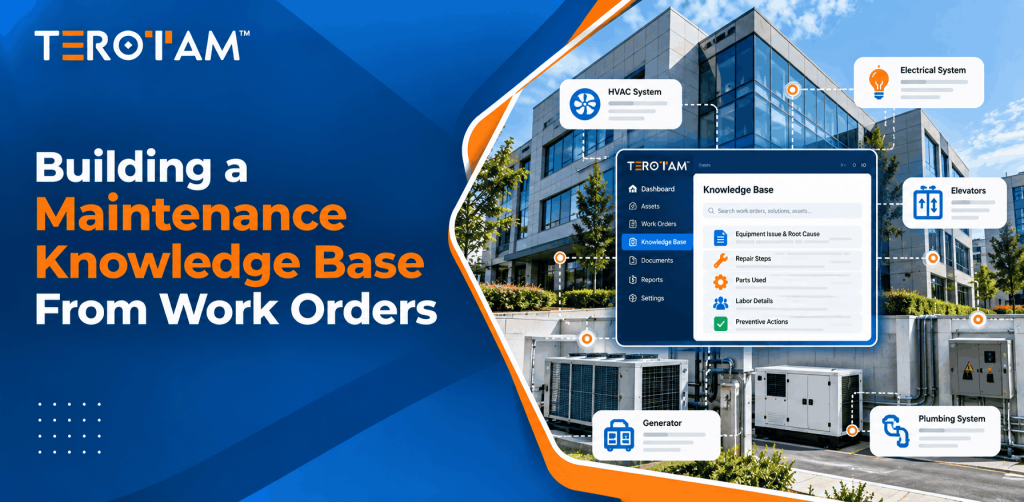
How Can Companies Build a Maintenance Knowledge Base From Completed...
Every completed maintenance work order contains a piece of operational knowledge. It may explain why a pump stopped working, how...
Learn More
Explore expert articles, industry trends, and practical guides to optimize your maintenance management operations.
Showing 10 of 104 articles in Maintenance Management
Every completed maintenance work order contains a piece of operational knowledge. It may explain why a pump stopped working, how...
Learn MoreArtificial intelligence (AI) is changing how companies manage equipment, schedule maintenance, and respond to failures. AI systems can monitor equipment...
Learn MoreA maintenance budget can look reasonable on paper while a small group of assets quietly consumes a large share of...
Learn MoreImagine a critical machine stops working during a busy production shift. The maintenance team arrives to investigate, but nobody knows...
Learn MoreData center uptime is sustained by precision execution, yet critical power, cooling, and fire suppression systems increasingly rely on OEM...
Learn MoreMaintenance leaders frequently face a puzzling financial paradox: equipment downtime drops, PM compliance climbs, and asset lifecycles extend, yet the...
Learn MoreA data center can have backup generators, UPS systems, and multiple layers of power protection. But what happens when the...
Learn MoreWalking through a busy factory means seeing machines that belong to everyone and no one. A shared conveyor belt might...
Learn MoreA bakery’s production schedule rarely leaves much room for unexpected delays. Dough must be mixed on time, proofing must happen...
Learn MoreRetail chains operate hundreds or thousands of locations, each with unique equipment portfolios, regional vendor networks, and localized facility managers....
Learn MoreJoin thousands of businesses that trust TeroTAM to manage their assets, facilities, and maintenance operations.