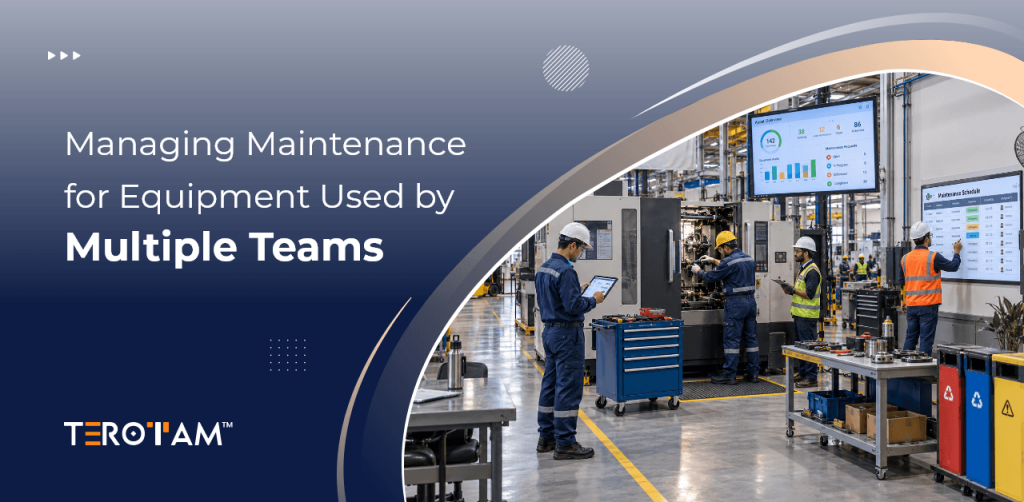
Indian manufacturing plants operate under constant pressure, tight production schedules, ageing equipment, manpower constraints, and rising compliance expectations. While maintenance teams are expected to keep machines running with minimal downtime, many still rely on Excel sheets, paper logs, and informal communication to manage daily work. This gap between expectation and execution often leads to repeated breakdowns, delayed repairs, and poor visibility for plant leadership.
CMMS software has become a practical answer to these challenges, especially for Indian plants that are scaling operations or managing multiple assets across shifts and locations. Instead of reacting to failures, CMMS helps teams organize maintenance work, track equipment history, and bring consistency into daily operations. This shift is no longer limited to large enterprises, mid-sized Indian factories are also adopting CMMS to gain better control over maintenance activities.
In this article we will discuss what CMMS software is, how Indian plants actually use it, pricing expectations, implementation challenges, and how solutions like TeroTAM support manufacturing teams on the ground.
What is CMMS software in plant maintenance operations?
CMMS software in a plant maintenance context refers to a digital system used to plan, execute, and track all maintenance activities related to equipment and utilities. In manufacturing plants, it acts as a central record for breakdown events, preventive maintenance tasks, technician actions, and asset history. Instead of scattered registers and spreadsheets, CMMS brings every maintenance activity into a structured, time-stamped workflow.
From an operational standpoint, CMMS software connects machines, maintenance teams, and schedules into one system. Each asset is mapped with its maintenance requirements, failure history, and service records. When a breakdown occurs or a preventive task is due, the system triggers actions, assigns responsibility, and captures repair timelines automatically. This allows plants to track maintenance performance without relying on manual follow-ups.
Over time, CMMS becomes the source of maintenance intelligence for the plant. Data collected from daily work helps teams analyze failure patterns, monitor repair efficiency, and plan maintenance more effectively. For Indian manufacturing plants dealing with high equipment utilization and limited maintenance windows, CMMS supports consistent execution while building reliable maintenance data in the background.
How Indian manufacturing plants actually use CMMS on the shop floor
Indian plants use CMMS software primarily to control execution, not to generate reports for management decks. The strongest adoption happens when CMMS simplifies daily work rather than adding documentation load.
Breakdown and incident handling in live production environments
When a machine fails during production, the priority is response speed. In plants using CMMS, incidents are logged immediately with asset identification, failure type, and time of occurrence. Supervisors assign technicians directly through the system, and response time is tracked without manual follow-ups.
This removes ambiguity across shifts and prevents breakdowns from being resolved informally without records. Over time, plants begin to see which assets fail repeatedly and which failures consume the most repair hours.
Preventive maintenance scheduling under production pressure
Preventive maintenance in Indian plants often suffers due to production overruns and manpower shortage. CMMS software helps by converting preventive plans into executable tasks rather than static schedules.
Plants configure:
- Time-based preventive tasks
- Usage-based maintenance for running equipment
- Seasonal or compliance-driven inspections
Tasks are auto-generated, assigned, and tracked. Missed tasks become visible rather than being buried in registers. This visibility forces coordination between maintenance and production.
Asset history building for ageing and mixed equipment fleets
Most Indian plants operate a mix of old and new machines sourced from different vendors. CMMS software creates a single digital history for each asset that includes:
- Failure frequency
- Repair actions taken
- Spare parts consumption
- Downtime contribution
- Maintenance cost accumulation
This history becomes critical when deciding whether to continue repairing an asset or plan replacement. Without CMMS, these decisions are often based on memory rather than evidence.
Shift coordination and technician accountability
In multi-shift plants, work duplication and handover gaps are common. CMMS software provides visibility into:
- Open incidents
- Work completed per shift
- Pending tasks at shift change
Supervisors can track technician workload and identify bottlenecks. This structure reduces dependency on individual experience and creates repeatable maintenance processes.
CMMS software pricing in India: what affects cost and what plants should expect
CMMS software pricing in India is driven more by operational complexity than by plant size alone. Indian manufacturers typically evaluate pricing based on how the system aligns with their maintenance load.
Key pricing factors include:
- Number of maintainable assets
- Volume of breakdowns and preventive tasks
- Number of technicians and supervisors
- Reporting and compliance requirements
- Single-plant vs multi-plant usage
Most Indian plants now prefer cloud CMMS software due to lower initial investment and faster deployment. The focus has shifted from license cost to value delivered through reduced downtime and better control.
Best CMMS software in India for manufacturing plants
When Indian manufacturing plants evaluate CMMS software, they aren’t looking for a tool with a long checklist of features. They are looking for something that survives real daily use on a busy shop floor where:
- operators are focused on production targets,
- technicians respond to breakdowns across shifts,
- there is little patience for redundant data entry,
- and visibility is needed down to the machine level.
Here’s what practical excellence looks like in CMMS for Indian plants, based on real adoption behavior across discrete manufacturing, process industries, and multi-shift operations.
1. Simple incident logging that matches actual shop-floor workflows
In many plants, the first interaction with CMMS is logging a breakdown. Here’s what good looks like in real life:
- Quick capture: Technicians must be able to record a breakdown with the fewest taps possible — ideally using a mobile app with QR/NFC tags on machines. If a fitter takes 5–10 minutes just to fill fields, adoption drops fast.
- Standard failure codes vs free text: Over time, plants build a list of common failure types (e.g., bearing seizure, belt tear). Best CMMS platforms let you start with free text and gradually normalize terms into codes without losing history.
- Photo & voice notes: Technicians often describe root cause through photos or quick voice notes — this becomes critical evidence during troubleshooting.
In plants that have moved to CMMS successfully, breakdown logging becomes the single source of truth that replaces scrap paper and WhatsApp images.
2. Preventive maintenance that actually gets done
Preventive maintenance (PM) isn’t about generating schedules — it’s about executing them reliably.
Successful Indian plants configure preventive plans based on:
- Time intervals (weekly, monthly, quarterly)
- Usage counters (operating hours, cycles, production tonnes)
- Seasonal needs (monsoon-related checks on outdoor equipment)
- Compliance triggers (safety and audit tasks)
Real evidence shows that plants with disciplined preventive execution reduce unplanned breakdowns by 15–40% within the first year of CMMS adoption.
Key capabilities that make this happen:
- Auto-generation of PM tasks
- Alerts that appear on mobile and supervisor dashboards
- Escalations for missed tasks
- Multi-frequency scheduling without manual recalculation
In plants where PM is still a calendar printout or Excel, tasks get missed, ignored, or explained away. A CMMS that embeds tasks into daily execution workflows changes that behavior.
3. Asset hierarchy that reflects actual plant structure
Many plants struggle with building an asset tree in CMMS because:
- they have mixed OEM equipment,
- floor setups change frequently,
- secondary equipment (pumps, chillers, conveyors) isn’t documented well.
Best-in-class CMMS platforms help teams:
- import existing BOMs and maintenance data
- build a nested asset hierarchy (plant → area → line → machine → sub-equipment)
- attach maintenance history and settings to each level
A disciplined asset hierarchy allows:
- asset-wise reliability analysis
- failure pattern recognition at component levels
- practical decisions on rebuilds vs replacements
Plants that maintain this structure see clearer visibility into: “which machine actually drives the highest downtime?”
4. Realistic spare parts integration that works with inventory practice
Spare parts control is a major maintenance pain point in Indian plants. Common challenges include:
- parts lying unused for months
- frequent stockouts for critical bearings and belts
- mismatch between BOM and physical stock location
- no link between consumption and actual maintenance events
CMMS platforms that support:
- spare bin locations
- minimum stock levels with alerts
- automatic consumption against work orders
- reorder triggers based on real consumption
…enable plants to stop firefighting for parts during a breakdown.
In plants that get this right, sites report a 20–30% reduction in urgent parts purchases within six months.
5. Cross-shift execution transparency
Indian manufacturing plants often run three shifts. One day’s maintenance work can start on shift-A, be passed to shift-B, and close only in shift-C.
Problems without CMMS:
- tasks completed but not recorded
- duplicate work assigned by different shift supervisors
- lost context after shift handovers
A good CMMS ensures:
- work status that flows across shifts
- clear handover notes embedded in tasks
- escalation to supervisors when tasks rollover
- real-time visibility for multi-shift coordination
This is the practical reason why many plants choose digital CMMS over spreadsheets — not because digital is modern, but because it reflects reality.
6. Actionable reporting — not just dashboards
In maintenance meetings, the most common complaint is: “We have dashboards, but nothing changes.”
Indian plants need reports that actually inform decisions:
- top 10 breakdown causes
- mean time between failures (MTBF) trends
- mean time to repair (MTTR) per machine
- preventive task adherence
- repeated failures by component
The best CMMS software lets users:
- filter reports by site, line, asset, and period
- export to Excel/PDF with minimal clicks
- schedule automatic distribution to stakeholders
Reports are only useful when they reflect reality, not ideal conditions.
7. Low-friction onboarding and change management
Good CMMS software is not judged by how many features it has, but by how quickly technicians start using it comfortably. Real-world requirements include:
- minimal daily data entry
- intuitive mobile experience
- offline support in low-connectivity zones
- help text that matches plant terminology
- structured training with plant-specific examples
Plants that skip this step lose momentum within the first 90 days.
CMMS vs EAM: what works better for Indian industries
EAM systems are designed for broad asset lifecycle management, including financial and capital planning. CMMS systems focus on maintenance execution.
In Indian manufacturing environments:
- CMMS is preferred for faster rollout and operational focus
- EAM is adopted mainly by large enterprises with strong ERP integration needs
For plants struggling with breakdowns, preventive adherence, and technician coordination, CMMS delivers faster operational impact.
Cloud CMMS software vs on-premise systems in Indian factories
Cloud CMMS software offers Indian plants flexibility in access, deployment, and scale. Maintenance teams can log work from the shop floor without relying on internal servers or IT teams.
On-premise systems require:
- Dedicated infrastructure
- Ongoing maintenance
- Longer implementation cycles
For plants managing multiple locations or limited IT bandwidth, cloud CMMS aligns better with operational needs.
CMMS implementation challenges faced by Indian maintenance teams
CMMS implementation often fails due to process readiness rather than system capability.
Common challenges include:
- Incomplete asset master data
- Technician resistance to digital tools
- Lack of standard failure classification
- Over-customization before adoption
- Insufficient training at shift level
Successful plants start small, focus on breakdown and preventive workflows, and improve data quality gradually.
What Indian manufacturers look for in CMMS software — summary checklist
Here’s the practical shortlist that Indian plants use when evaluating CMMS tools:
- Ease of incident logging with mobile QR/NFC support
- Flexible preventive maintenance rules
- True asset hierarchy and history
- Spare parts integration with consumption tracking
- Cross-shift transparency and accountability
- Actionable reliability reporting (MTBF, MTTR, failure breakdowns)
- Low training barrier and fast onboarding
When plant maintenance teams see these capabilities deployed in everyday work, the value of CMMS becomes evident long before dashboard analytics.
How TeroTAM fits these practical needs
TeroTAM is built for Indian plant environments where:
- multi-shift execution is the norm
- technicians work across asset types
- preventive maintenance schedules are crowded
- real data beats assumptions
It supports:
- quick incident logging with QR and mobile entry
- flexible preventive and condition-based triggers
- spares tracking tied directly to maintenance events
- asset history with real reliability insights
- reports that maintenance teams actually use in daily routines
Rather than a system that sits in management view only, TeroTAM becomes an execution hub — the place where work actually gets recorded, tracked, and improved.
Summing it up
CMMS software has shifted from being an optional tool to a practical requirement for Indian manufacturing plants.
As operations scale and downtime costs rise, relying on manual systems creates more risk than savings. CMMS helps plants bring consistency, visibility, and control into maintenance operations.
TeroTAM enables Indian plants to implement CMMS in a way that matches real operational needs rather than ideal scenarios. To see how CMMS can fit into your plant’s maintenance workflow, reach out at contact@terotam.com