Advanced and Ultra-modern Industry solutions such as IIoT, Machine Learning, and Cloud have begun to disrupt production, and industry experts have begun to realize the full potential of future digital transformation services, technologies, and services to create more at lower costs and faster. For the industrial industry, digital transformation (or working with a branded IoT-powered solution provider company) is no longer a choice, but a must.
IoT sensors are already aplenty in smart homes and smart buildings, typically installed in equipment or monitoring conditions from a vantage point such as the ceiling. However, thanks to the advancement of IoT technology, even floors can now be smart.
It’s extremely probable that you’ve previously walked on a smart floor. Perhaps your children have played the dance arcade game Dance Dance Revolution, or you’ve walked across a smart floor in a shoe store to have a gait analysis performed. Heated flooring, which is common in cool-climate houses, aren’t considered “smart” if they’re managed manually or by a timer, but it’d be if they could detect temperature changes and start offering you smart inputs with smarter monitoring data analytics.
What Are Smart Floors and How Do They Work?
Smart floors are often programmed with a very thin layer of IoT sensors and are created and manufactured according to their application. The sensors send data to a central data repository via protocols ranging from radio signals to a high-speed communication network, which can compile and evaluate the signals from the entire smart floor and decide on smart actions in different areas of your business.
What Can an IoT-Based Smart Floor Tracking Meter Do for Your Business?
IoT-enabled smart floor tracking systems offer powerful capabilities that enhance safety, efficiency, and operational visibility across your facility. On the production floor, they can be used in several high-impact ways:
Health & Safety Monitoring
Smart floors equipped with gait analysis can detect signs of employee fatigue and identify slips, trips, or sudden falls. This helps improve workplace safety and enables quicker emergency response.
Comfort & Environmental Control
These floors can automatically heat or cool based on temperature changes, contributing to better climate control. Some systems can even adjust floor color to match the time of day or support employee circadian rhythms.
Power Generation
Every step on a smart floor can generate small amounts of electricity, helping cut energy costs. In emergencies, this stored energy can be used to power essential lighting or equipment.
Advanced Cleaning Capabilities
Smart flooring can capture fine airborne particles and even self-clean, reducing the need for frequent manual cleaning and improving indoor air quality.
Movement Tracking
By tracking foot traffic, smart floors help facility managers identify high-usage areas. Step counts can also support workplace wellness programs or be gamified to encourage movement.
Weight Monitoring
With built-in weight-sensing capabilities, smart floors can track load variations, reducing dependency on traditional industrial scales and improving asset monitoring on the production line.
Intelligent Security Verification
Smart flooring can analyze movement patterns to verify whether a person is authorized to access a specific area—replacing the need for traditional touchpads or manual checks.
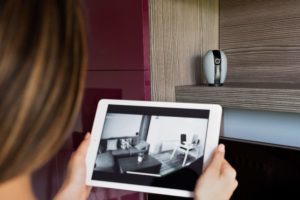
How IoT-based Floor Tracking Meter can make your Business Smarter?
Data-Driven Planning and Decision Making
It is now easier and faster to collect and handle vast amounts of manufacturing data through the cloud, not just in a single facility, but across numerous production sites, thanks to IoT-powered floor tracking technologies. Companies will obtain superior insights when integrated with analytics, allowing them to optimise plant operations, decrease defects, and execute preventative maintenance.
Data Analytics and Foresight Preventive Maintenance
In the event of a machine failure, most manufacturing floors have procedures in place to divert production. However, there would be a link between downtime and revenue/profitability. It is feasible to forecast and avert catastrophic failure on large-scale plant floor equipment, such as boilers or compressors, using sensors, IoT, and analytics.
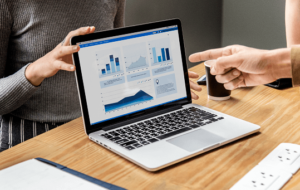
Preventive maintenance solutions can now properly determine the root cause of problems by merging IoT-based Floor tracking equipment, machine learning, and analytics capabilities, allowing clients to avoid wasteful plant floor shutdowns due to fake warnings.
Reliability and Optimization
A smart floor tracking meter with IoT sensors may increase yield, uptime, and quality, as well as minimise expenses and waste, thanks to automated workflows, asset synchronisation, improved tracking and scheduling, and optimal energy use. The nominal manual intervention improves the reliability of the system. Remote equipment management, which includes setting particular limits and settings, can save a lot of money and energy.
Insight into the Business World
Using the IoT-based Floor tracking solution, Organizations may not only radically modify manufacturing processes, but also improve relationships with suppliers and consumers, by connecting shop floor choices and insights with the rest of the supply chain, sales & marketing, and the larger corporation through the IoT ecosystem.

Is your working floor truly smart? Are you able to use floor tracking statistics to monitor the efficiency of your employees and machines? If not, it’s time to get started with our IoT-based Floor Tracking System and transform your facility with real-time insights.

With smart floors, you can optimize productivity, enhance safety, and make data-driven decisions that boost overall performance. These insights help you identify hidden inefficiencies and streamline operations like never before.
Connect with our experts today at contact@terotam.com to learn more about how to take your business to the next level.